
Made in Italy in Handbags: What Really Lies Behind the Label
Handbags Made in Italy are known worldwide for Italian leather craftsmanship, high-quality materials, and meticulous workmanship. But the words “Made in Italy” alone reveal little about how a handbag was actually made.
Several concrete factors matter: Where does the leather come from? Where is the handbag produced? Which steps are carried out by hand? And how transparent is the entire manufacturing process?
At Parise, these questions have clear answers: the leather comes from Italy, production takes place in the Province of Vicenza in the Veneto region, and every stage of production is part of a traceable artisanal process.
What Does Made in Italy Mean for a Handbag?
An authentic Italian leather handbag should be more than a product bearing an Italian label. Its origins and craftsmanship should be traceable, from the raw material to the finished bag.
Italian Leather as the Starting Point
At Parise, production begins with 100% cowhide leather tanned in Italy. The leather comes from the region and is initially delivered to our warehouse in Schiavon (VI).
There, every hide is carefully inspected before being approved for further processing. Only then does the actual production of the handbags begin.
Artisanal Craftsmanship in Vicenza
Parise’s production and artisanal manufacturing processes take place in the Province of Vicenza. This means that not only the design, but also a significant part of the actual manufacturing process, is rooted in the Veneto region.
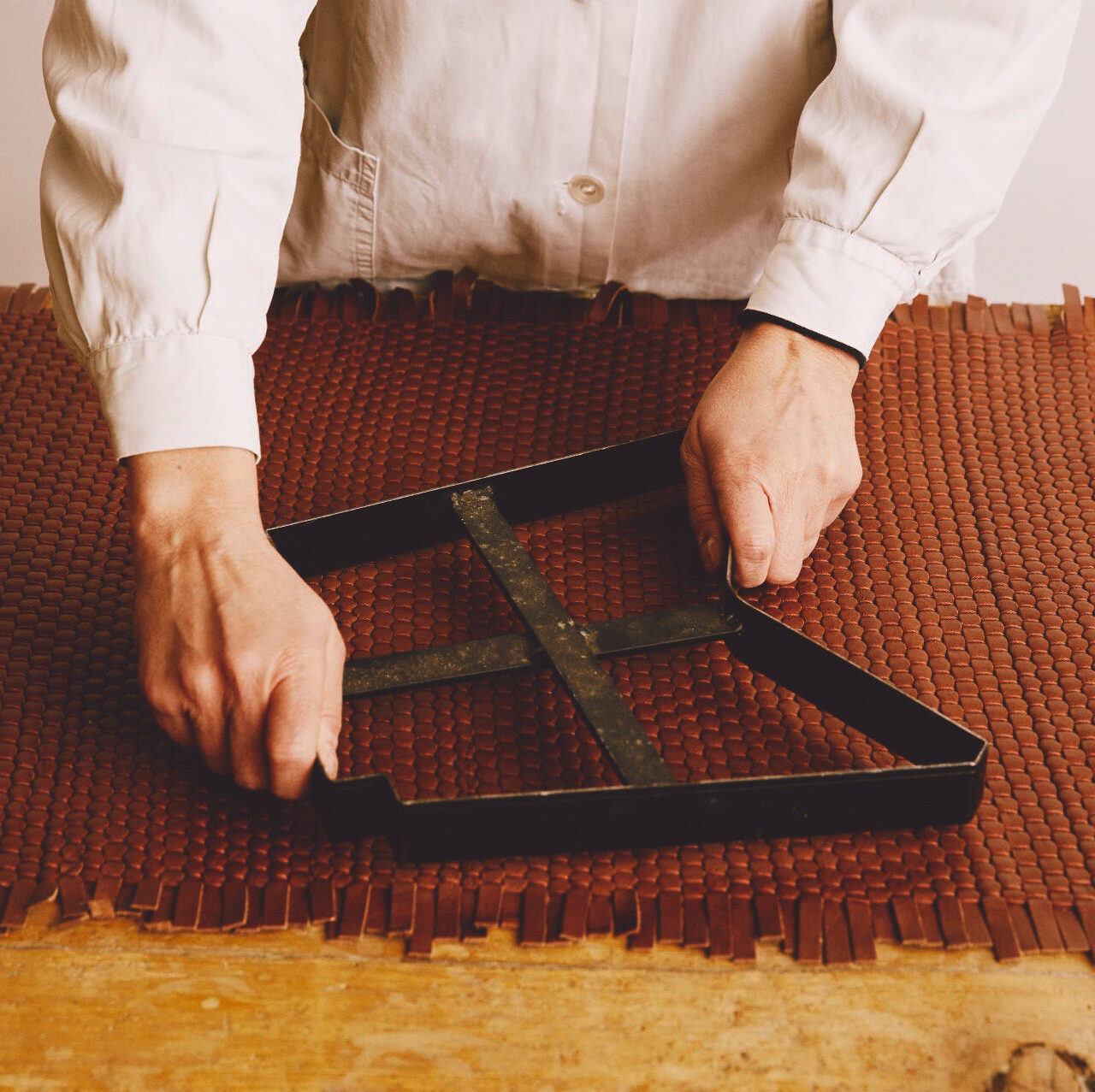
The leather is cut into narrow strips and then transformed into the distinctive woven leather fabric. Many of these steps require experience and precision and cannot simply be replaced by standard industrial processes.
Parise’s Distinctive Weaving Technique
One of the defining features of Parise handbags is the transformation of smooth leather into a woven leather fabric. To achieve this, narrow leather strips are interwoven with cotton yarn on traditional treadle looms.
The technique has its roots in historic weaving traditions from Venice and the Veneto region. Over the years, Parise has further developed this process by refining the relationship between leather-strip width, yarn, and the different twists of the warp and weft.
The result is a soft, lightweight woven leather fabric that gives Parise handbags their distinctive surface.
Learn more about Parise’s origins and Italian leather craftsmanship in the Veneto region in our in-depth article.
How Can You Recognize an Authentic Made-in-Italy Handbag?
When buying an Italian leather handbag, it is worth taking a closer look at the manufacturing process. Asking a few specific questions can help you better assess its origins and quality.
1. Where Does the Leather Come From?
A transparent brand should be able to explain where its leather is tanned and processed. “Italian leather” should not be used merely as a marketing term.
At Parise, the cowhide leather is tanned in Italy and inspected at our warehouse in Schiavon before processing begins.
2. Where Is the Handbag Made?
“Made in Italy” does not automatically mean that every single production step takes place in Italy. That is why it is worth asking where the actual manufacturing takes place.
At Parise, production and artisanal craftsmanship are concentrated in the Province of Vicenza. This gives our handbags a clearly defined regional identity: Made in Veneto.
3. Which Steps Are Carried Out by Hand?
Handcrafted leather handbags are created through numerous individual production steps. At Parise, these include preparing the leather strips, weaving the leather fabric, cutting the panels, and assembling the finished handbags.
Especially when working with a complex weaving technique, artisanal craftsmanship cannot be fully replaced by industrial processes.
4. Is the Manufacturing Process Traceable?
A credible brand should be able to explain where its materials come from, where production takes place, and how the product is made. The more specific this information is, the easier it becomes to assess the true origins of a handbag.
At Parise, the journey from the inspected leather in Schiavon, through processing in the Province of Vicenza, to the finished handbag can be traced.
Made-in-Italy Handbags: Quality You Can Trace
A Made-in-Italy handbag is defined by more than a label of origin. What truly matters are the materials, the production location, artisanal craftsmanship, and transparency.
At Parise, these elements come together through a distinctive tradition rooted in the Veneto region: Italian leather, regional craftsmanship, and a historic weaving technique reinterpreted for contemporary leather handbags.
Discover Parise’s handcrafted leather handbags or explore our leather handbags.